Moving to Utah From Texas in 2026: Is It Worth It?
Moving to Utah From Texas in 2026: Is It Worth It?
Texas and Utah get compared a lot, and for good reason. Both have strong job growth, no shortage of space, and a reputation for being business friendly. But the honest answer to whether moving from Texas to Utah is worth it depends on what you actually spend your money on, because the tax math is more complicated than people expect. Here is the real 2026 breakdown.
Texas Wins on Income Tax, Utah Wins on Property Tax
Texas has no state income tax at all, which is the number one reason people move there. Utah has a flat 4.55 percent income tax. On paper, Texas looks like the clear winner. But Texas makes up for that lost revenue through property taxes, which average 1.6 to 1.8 percent statewide, among the highest in the country. Utah's average effective property tax rate sits around 0.55 to 0.6 percent, one of the lowest in the nation.
On a $500,000 home, that difference is not small. Texas property tax on that home runs roughly $8,000 to $9,000 a year. The same home in Utah costs around $2,750 to $3,000 a year in property tax. For homeowners, that gap often outweighs the income tax savings entirely.
Texas Homes Cost Less to Buy
Statewide, the median home price in Texas is around $310,000 to $350,000, noticeably lower than Utah's statewide median of roughly $560,000. Austin and Dallas-Fort Worth run higher, closer to $380,000 to $510,000, but even those numbers stay below typical Utah County pricing. If your priority is the lowest possible purchase price, Texas usually wins that specific comparison.
Where the Math Actually Lands
Run the full numbers together, income tax, property tax, and home price, and the two states end up closer than most people assume. A renter or lower income household often comes out ahead in Texas because of the missing income tax. A homeowner with a mid to higher income, especially one buying a home in the $450,000 to $600,000 range, often finds Utah's lower property tax rate closes most or all of the gap.
The Lifestyle Difference Is Real Too
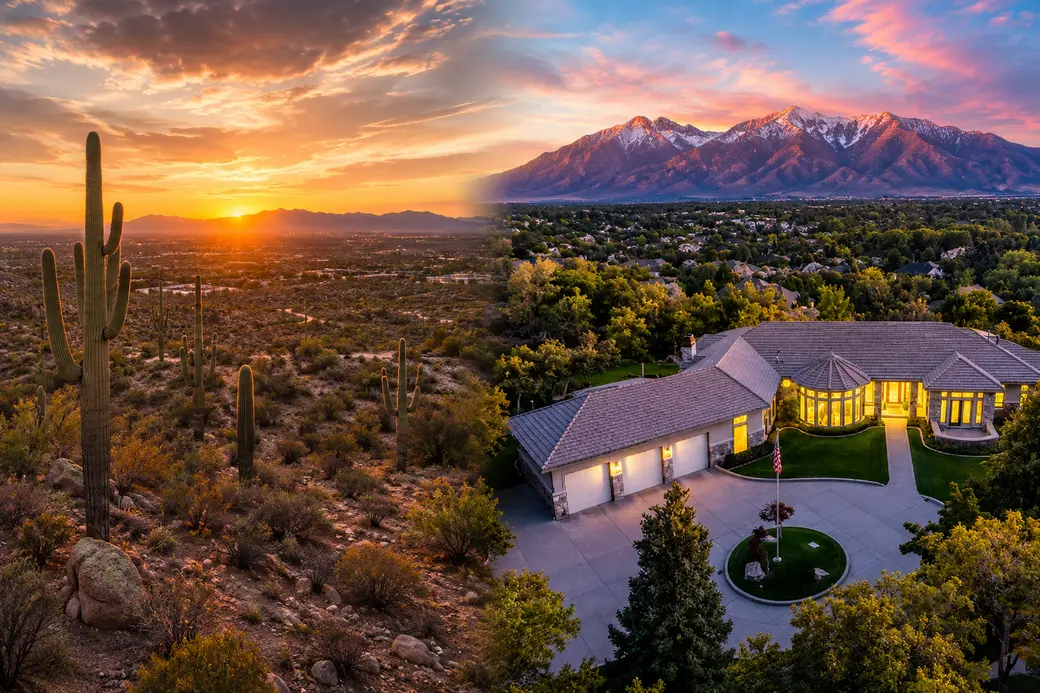
Beyond the numbers, the two states feel very different day to day. Utah offers four distinct seasons, mountain access, and a more compact metro area along the Wasatch Front. Texas offers flatter geography, warmer winters, and considerably larger urban centers in Houston, Dallas, and Austin. Neither is objectively better, but it is worth being honest with yourself about which lifestyle you actually want before the tax math becomes the deciding factor.
Why Utah County Specifically Draws Texas Transplants
The tech job market is the biggest pull. Silicon Slopes, the corridor running through Lehi, American Fork, and Draper, has become one of the fastest growing tech regions in the country, with employers like Adobe, Qualtrics, Domo, and Pluralsight. If you are relocating for a tech role or want access to that job market without paying Lehi's premium prices, American Fork and Pleasant Grove remain the best value entry points in the county.
If you are weighing this move, I would be glad to run the actual numbers against your specific income and target home price so you can see where you really land. You can also get a sense of your current home's value at danarealtorutah.com/evaluation
Frequently Asked Questions
Is Texas or Utah cheaper overall?
It depends on your income and home price. Renters and lower income households often do better in Texas due to no income tax. Homeowners in the $450,000 to $600,000 range often find Utah's lower property tax closes most of the gap.
Why are Texas property taxes so high?
Texas relies heavily on property taxes in place of income tax to fund state and local government, which is why rates run 1.6 to 1.8 percent compared to Utah's 0.55 to 0.6 percent.
Is Utah County a good option for tech workers moving from Texas?
Yes, the Silicon Slopes corridor through Lehi, American Fork, and Draper has become a major tech hub with strong job growth, comparable to what many Texas tech workers already know from Austin.
Are Utah winters a big adjustment for Texans?
Yes, this is usually the biggest lifestyle change. Utah has real winters with snow, compared to Texas's mild winters, so it is worth experiencing a full Utah winter before committing if you have never lived somewhere with snow.
Which state has better long term appreciation potential?
Both have strong population growth driving demand, but Utah's more limited land along the Wasatch Front has historically supported steadier price appreciation than Texas's more spread out, faster-building markets.
If you are trying to decide whether this move makes sense for your specific situation, I would love to run the real numbers with you. Call or text me at 801-636-3609.
If you like to find out or read more click the link below.
https://danarealtorutah.com/blog/moving-to-utah-from-nevada-2026
Categories
Recent Posts